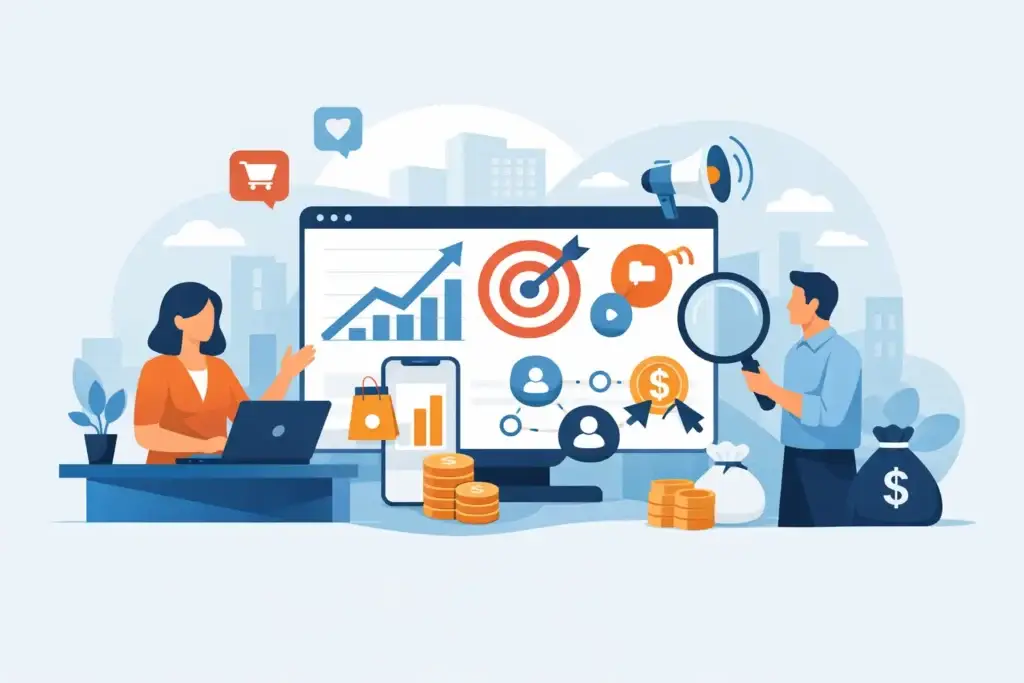
If you have ever paid for marketing and then struggled to answer what it actually produced, this is the right question to ask. What is performance marketing for SMEs? In simple terms, it is marketing built around measurable business outcomes – leads, sales, bookings, inquiries, cost per acquisition, and return on ad spend – rather than vague activity or brand noise.
For a small or mid-sized business, that distinction matters. You do not have the luxury of wasting six months on campaigns that look busy but do not move revenue. You need channels you can track, decisions you can justify, and a setup that tells you what is working, what is underperforming, and where to invest next.
What is performance marketing for SMEs in practice?
Performance marketing is not one platform. It is an operating model.
The core idea is straightforward: you spend on marketing, define the result you want, track that result accurately, and optimize based on performance. If a campaign generates qualified leads at a sustainable cost, you scale it. If it burns budget without producing results, you change it or stop it.
For SMEs, this usually includes channels like Google Search Ads, Meta Ads, landing pages, conversion tracking, remarketing, SEO, and content that supports demand capture over time. In some markets, it may also include TikTok, email automation, or region-specific platforms if the audience is there.
The difference from traditional marketing is accountability. A billboard can create awareness, but it is hard to tie directly to revenue. A Google Ads campaign tied to phone call tracking and form submissions can show how many leads came in, what they cost, and which keyword triggered them.
That does not mean brand building has no value. It means SMEs usually need marketing that earns the right to keep running.
Why SMEs are a natural fit for performance marketing
Large companies can afford slow feedback loops. SMEs usually cannot.
A founder, general manager, or operations lead needs to know whether a monthly budget is producing pipeline. Performance marketing suits that reality because it compresses the learning cycle. You can launch a search campaign, test two landing pages, see where leads are coming from, and improve the account within weeks instead of guessing for quarters.
It also gives smaller businesses a way to compete intelligently. You may not outspend larger competitors, but you can often outperform them in focus. A local service company targeting high-intent search terms with a fast-loading landing page can beat a bigger brand that sends all traffic to a generic homepage.
That said, performance marketing is not magic. If your offer is weak, your sales process is slow, or your website creates friction, paid traffic will expose those problems quickly. Good performance marketing does not just buy clicks. It aligns traffic, messaging, and conversion path.
The channels most SMEs use
Google Search Ads are often the fastest starting point because they capture existing demand. If someone is actively searching for accounting services, office renovation, HR software, or catering in your area, search intent is already there. The job is to show up with the right message and convert that intent efficiently.
Meta Ads work differently. They are stronger for demand generation, retargeting, and visually driven offers. They can be effective for F&B, retail, aesthetic services, events, education, and many consumer-facing businesses, but they usually require better creative and a clearer funnel.
SEO is also part of performance marketing when it is tied to measurable business goals. It is slower than paid media, but it compounds over time. A useful service page or well-targeted content piece can keep generating inquiries long after the publishing work is done. For SMEs, the practical model is often short-term lead generation from paid channels paired with long-term visibility through SEO.
Landing pages and websites matter just as much as the traffic source. Sending paid clicks to a slow, cluttered, or unclear page is one of the most common reasons campaigns underperform. The ad may be fine. The page may be the problem.
What makes performance marketing different from “running ads”
Many businesses think they are doing performance marketing because they boosted posts or launched a few ad campaigns. That is not the same thing.
Real performance marketing starts with commercial intent and measurement. Before spend goes live, you should know what counts as a conversion, how it will be tracked, what a qualified lead looks like, and what cost range is commercially viable.
It also requires disciplined optimization. You review search terms, ad copy, audience quality, lead quality, page behavior, and conversion rates. You make changes based on data, not hunches. This is why performance marketing works best as a managed process rather than a one-off campaign setup.
Another key difference is account transparency. SMEs should know where budget is going, what platforms are being used, what data is being collected, and how success is being defined. If reporting is vague, or the agency keeps control of the ad account in a way that prevents visibility, that is a red flag.
The metrics that actually matter
Not every metric deserves equal attention.
Clicks, impressions, and reach can help diagnose campaign behavior, but they are not the end goal. For most SMEs, the numbers that matter most are qualified leads, cost per lead, conversion rate, booked appointments, sales, customer acquisition cost, and revenue generated from each channel.
The right metric depends on the business model. An eCommerce store may care most about return on ad spend and average order value. A B2B services firm may care more about cost per qualified lead and close rate. A clinic may prioritize appointment volume and show-up rate.
This is where many campaigns go sideways. The platform may report strong top-line numbers, but if the business is getting poor-fit leads or low-intent inquiries, the campaign is not actually performing. SMEs need reporting that connects marketing activity to commercial outcomes, not just platform dashboards.
Where performance marketing goes wrong for SMEs
The most common issue is weak tracking. If phone calls are not tracked, forms are not configured properly, or CRM follow-up is missing, you end up making budget decisions with incomplete data.
The second issue is channel mismatch. Not every platform suits every business. A high-ticket B2B service may get better results from search and SEO than from short-form social ads. A visually driven product brand may see the opposite. The right mix depends on buying behavior, sales cycle, and market maturity.
The third issue is expecting instant scale. Performance marketing can generate results quickly, but optimization still takes time. Early campaigns are often about learning where quality comes from, which offers resonate, and what conversion friction needs to be fixed.
There is also a broader trade-off to understand. Paid media produces speed, but it stops when spend stops. SEO builds longer-term equity, but it takes longer to gain traction. For many SMEs, the most sensible model is not choosing one over the other. It is combining immediate demand capture with long-term visibility building.
How SMEs should approach it
Start with one clear business goal. That could be more sales calls, more quote requests, more online purchases, or more foot traffic from local search. Then choose the channel most likely to reach buyers with that intent.
From there, build the basics properly. That means conversion tracking, a focused landing page, clear offer positioning, and reporting that separates raw lead volume from lead quality. Once that foundation is stable, expand into supporting channels.
A practical example looks like this: launch Google Search Ads for high-intent keywords, send traffic to a page built for one service, track calls and forms, review lead quality weekly, and use SEO content to expand organic visibility around related searches. If the audience is active on social platforms, add remarketing or targeted paid social after the primary conversion path is working.
That is usually where a coordinated growth partner adds real value. The issue is rarely just ad setup. It is making sure the ad account, website, content, and reporting work together. That is the model AdCendes is built around because SMEs do not need five disconnected vendors. They need one accountable team that can turn marketing activity into business movement.
So, what is performance marketing for SMEs really about?
At its best, it is a more disciplined way to grow. It replaces guesswork with measurement, vanity with accountability, and fragmented activity with a channel strategy tied to revenue.
For some SMEs, that starts with a simple search campaign and a better landing page. For others, it becomes a broader system that combines paid media, SEO, social, and web improvements under one reporting view. Either way, the principle stays the same: spend with intent, track what matters, and keep improving the parts that produce real business results.
If your marketing has felt hard to measure, that is not a sign to stop investing. It is a sign to build a system where performance is visible, decisions are faster, and growth is based on evidence rather than hope.