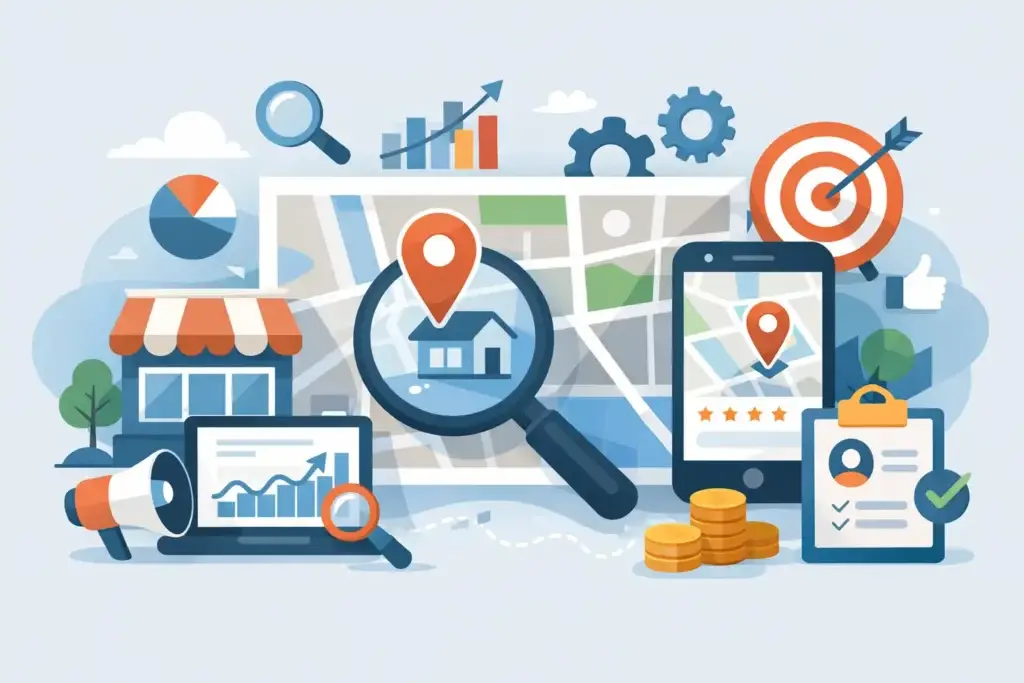
A potential customer searches for a service, sees three nearby businesses, and calls one before lunch. That is the moment local SEO needs to win. The best local SEO tactics are not about collecting vanity rankings. They are about making your business the clearest, most credible choice when local intent is high and a buyer is ready to act.
For SMEs, this work should connect directly to calls, quote requests, bookings, store visits, and revenue. A polished website without accurate local information will lose opportunities. A well-maintained business profile without conversion-focused service pages will do the same. Local visibility works when the essentials reinforce each other.
Start With Your Google Business Profile
Your Google Business Profile is often the first impression a local prospect gets of your company. Treat it like a live sales asset, not a directory listing completed once and forgotten.
Make sure the business name, primary phone number, website, address, service areas, business hours, and category are accurate. Select the most specific primary category available. A general category may feel safe, but it can weaken relevance when someone searches for a specialized service. Add secondary categories only when they genuinely reflect work you provide.
The profile also needs evidence. Upload current photos of your team, premises, completed projects, menu items, products, or process. Add services with clear descriptions, answer common questions, and publish updates when you have meaningful news, offers, or seasonal changes. For a service business, photos of real work usually outperform generic stock images because they reduce doubt.
Do not create multiple profiles for locations that do not exist. Do not stuff city names or keywords into your business name. These shortcuts can trigger suspensions, create customer confusion, and cost far more than they deliver.
Build Service Pages Around Local Buying Intent
A homepage cannot rank well for every service, customer type, and location you want to serve. If your business offers several distinct services, give each priority service its own page. A commercial cleaning company, for example, may need separate pages for office cleaning, post-renovation cleaning, and disinfection services because each search reflects a different need.
Each page should answer the questions a ready-to-buy customer has: what you do, who it is for, what the process involves, what makes your approach reliable, and how to request a quote. Put the call to action close to the top, then support it with useful details, proof, and clear next steps.
Local relevance should be earned, not forced. Mention neighborhoods, cities, or service areas where they help a customer understand coverage or where you have real experience. Include local project examples where permitted, customer testimonials, parking or delivery details if relevant, and practical information that generic competitors will not have.
Creating a separate page for every nearby suburb is rarely a strong strategy. Thin pages that simply swap place names offer little value and can dilute your site. Build a location page when you have a physical location, a meaningful local offering, or enough specific information to make that page useful.
Make Reviews Part of Operations, Not a Last-Minute Campaign
Reviews influence local rankings, but their larger value is conversion. Buyers compare ratings, recency, volume, and the way a business responds to criticism. A steady flow of honest reviews tells prospects that your business is active and accountable.
The timing matters. Ask for a review shortly after a successful delivery, completed appointment, or positive customer interaction. Make the request simple and consistent. Your front-line team should know when to ask, who owns follow-up, and how to flag unhappy customers before a small issue becomes a public complaint.
Never buy reviews or pressure customers to leave a five-star rating. That approach creates platform risk and weakens trust. Instead, ask customers to describe the service they received. Specific review language often helps future buyers understand your strengths better than any marketing claim can.
Respond to reviews with care. Thank positive reviewers without copying the same generic message. For negative feedback, acknowledge the issue, avoid arguing publicly, and move resolution offline when personal details are involved. A thoughtful response can protect credibility even when the review remains visible.
Fix the Technical Details That Block Local Visibility
Local SEO is not only profile work and content. Search engines and users still need a site that loads quickly, works on mobile, and makes contact effortless. Many local searches happen on a phone, often between meetings or while a customer is comparing options. If the phone number is hard to tap, the form is too long, or the page takes too long to load, traffic will not turn into leads.
Keep your business details consistent across your website, business profiles, social platforms, and established industry directories. Small differences in suite numbers, phone formatting, or business names can create unnecessary uncertainty. Consistency will not compensate for poor service or weak pages, but it makes it easier for search engines to verify your business information.
Use clear page titles and headings that match real searches. Add structured business information where your website platform supports it, including location, opening hours, phone number, and service details. Check that search engines can access your important pages and that noindex settings, broken redirects, or duplicate versions of the site are blocking progress.
For businesses with a physical location, place a map, directions, and location-specific contact details on the contact page. For businesses that travel to customers, state the service area plainly. Customers should not have to submit a form just to find out whether you serve them.
Earn Local Authority With Proof, Not Random Links
Links and mentions from credible local sources can strengthen visibility, but quantity is not the goal. One mention from a respected industry association, local event, supplier, property partner, or community organization can be more valuable than dozens of low-quality directory listings.
The best way to earn these signals is to do work worth referencing. Sponsor an event only if it aligns with your market. Share useful expertise with a trade group. Publish a practical project case study. Build relationships with complementary businesses that serve the same customers without directly competing with you.
Be selective. Paid link schemes, irrelevant guest posts, and bulk directory submissions create noise, not durable authority. If a listing or partnership would make no sense to a real customer, it probably will not create meaningful SEO value either.
Measure Leads, Not Just Map Rankings
A rise from position nine to position three is useful only if it produces business. Track the actions that matter: calls, form submissions, booking requests, direction requests, quote leads, and qualified opportunities. Where possible, record lead source in your CRM or sales process so you can see which services and locations actually generate revenue.
Review performance monthly, but do not react to every weekly ranking fluctuation. Local results change based on location, device, competition, and search behavior. Look for trends over time: Are more people finding your profile? Are they clicking through to your site? Are service pages converting? Are calls becoming sales?
This is also where the trade-off between SEO and paid search becomes practical. Local SEO compounds over time, but it may take months to build visibility in a competitive category. Search ads can create immediate demand while organic work strengthens. For many SMEs, the smarter move is coordinated investment rather than waiting for one channel to carry the entire growth target.
Prioritize the Work That Removes Buyer Friction
If resources are limited, start with accuracy, reviews, high-intent service pages, and conversion tracking. These are the foundations that make every later tactic more effective. Do not spend months publishing generic blog posts while customers cannot easily find your hours, understand your offer, or request a quote on mobile.
Local SEO rewards businesses that make it easy to choose them. Keep the information current, show real proof, respond like a responsible operator, and measure whether visibility is turning into conversations your sales team can close. That discipline is what turns a local search presence into a dependable source of growth.