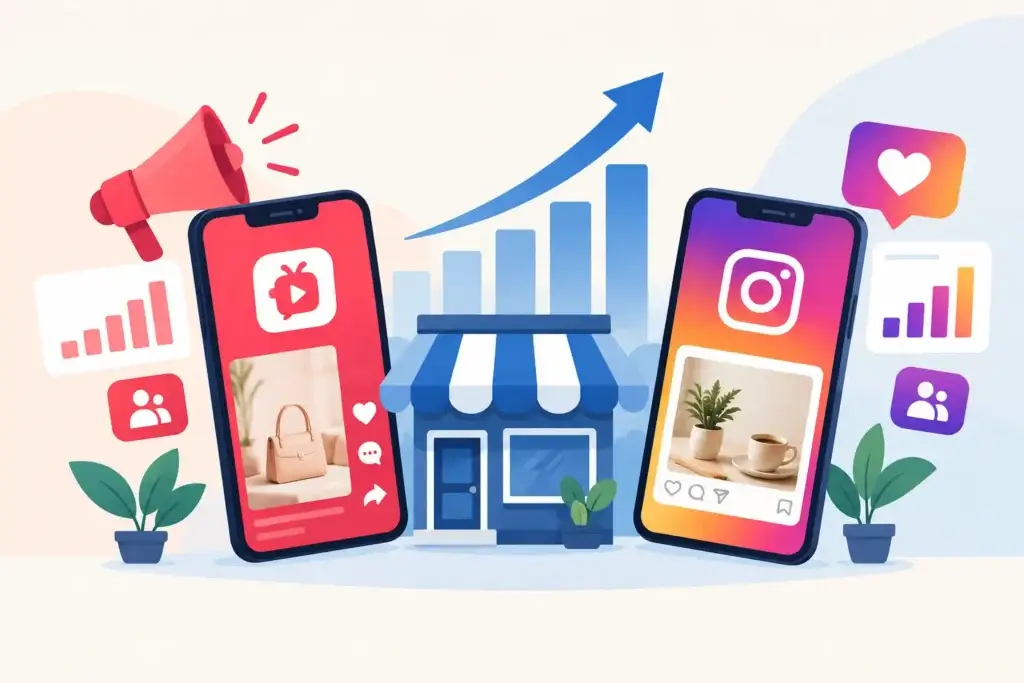
A restaurant can post the same polished food photo on two platforms and get two very different outcomes. On Instagram, it may build awareness and attract casual engagement. On Xiaohongshu, also known as XHS or Little Red Book, it may appear in a search-driven decision journey where a Chinese-speaking customer is actively looking for where to eat, what to buy, or which provider to trust. That difference is the starting point for xhs vs instagram marketing.
For SMEs, this is not a debate about which platform is more popular. It is a channel allocation decision. The right choice depends on who you need to reach, how they make buying decisions, how quickly you need leads, and whether your team can consistently produce the right kind of content.
XHS vs Instagram Marketing: The Core Difference
Instagram is primarily a visual social network built around discovery, community, creator culture, short-form video, Stories, direct messages, and paid targeting. It can support brand building and direct response, especially when Meta Ads, retargeting, and conversion-focused landing pages are part of the setup.
XHS is closer to a social search and recommendation platform. Users often arrive with intent: they search for reviews, compare products, save recommendations, and look for proof before making a decision. A post about a renovation firm, skincare treatment, café, university program, or recruitment service can continue generating visibility long after publication if it ranks for relevant searches.
That makes XHS especially useful when your business needs trust from Chinese-speaking audiences. Instagram is generally stronger for broad lifestyle reach, visual brand presence, community engagement, and paid campaign scale across varied audience segments.
Neither platform is automatically better. A B2C retail brand may need both. A B2B SaaS company with no Chinese-language sales process may get more value from LinkedIn, Google Search Ads, and a focused Instagram presence than from XHS. The channel should serve the revenue model, not the other way around.
Start With the Audience, Not the Content Format
The most expensive social media mistake is publishing content because a competitor is posting there. Start by identifying the people who actually influence a purchase.
XHS is worth serious consideration if you serve Chinese consumers, Chinese-speaking residents, cross-border shoppers, students, travelers, or family decision-makers who rely heavily on peer recommendations. In Singapore, this can be highly relevant for F&B, beauty, retail, education, property-related services, interior design, healthcare-adjacent services, and premium local experiences.
Instagram is often more practical when your customers are younger, visually motivated, English-speaking, and accustomed to discovering brands through Reels, creators, Stories, and paid ads. It is also a more familiar advertising environment for many SMEs because it sits within the Meta ecosystem, where campaigns can be measured against website visits, leads, purchases, and remarketing audiences.
Ask a simple operational question: when your ideal customer is close to buying, where do they look for reassurance? If they search for reviews and detailed experience posts in Chinese, XHS has a clear role. If they respond to visual content, influencer cues, and targeted ads before clicking to your site or messaging your team, Instagram may be the faster route.
Language Is a Conversion Issue
Many businesses treat Chinese-language content as a translation task. It is not. On XHS, local context matters: the wording of a search term, the concerns raised in comments, the type of social proof expected, and the style of a useful recommendation post.
A direct English-to-Chinese translation often feels generic and underperforms. Content needs to reflect how the audience searches and evaluates. For an interior design firm, that could mean explaining budget ranges, renovation timelines, material decisions, and real homeowner trade-offs. For an F&B brand, it could mean location, queue expectations, signature dishes, price points, and whether the experience is worth the trip.
Instagram also benefits from localized messaging, but it gives brands more room for broad visual storytelling. XHS demands usefulness and credibility more consistently.
Content That Works on Each Platform
Instagram rewards content that earns attention quickly. Reels, before-and-after videos, customer reactions, product demonstrations, founder-led clips, and creator collaborations can work well. The first few seconds matter. So does having a clear next action: visit the site, send a message, claim an offer, or save the post.
The risk is that brands chase views without building a conversion path. A Reel with strong reach but no relevant audience, offer, or follow-up process is not a growth system. It is content activity.
XHS content should answer questions a buyer is already asking. Strong posts often feel like useful recommendations rather than advertisements. They may include practical tips, real case details, product comparisons, customer scenarios, transparent pricing guidance, and honest limitations.
For example, a clinic should not simply post, “Book now.” A stronger XHS post could explain what a first consultation involves, who may not be a suitable candidate, what results realistically take time, and how customers should compare providers. This type of content creates trust before the inquiry.
The trade-off is speed. Instagram can produce fast bursts of reach, particularly with paid support. XHS content may take longer to gain traction, but high-value posts can compound through search and saves. For SMEs with limited resources, that makes content quality more important than posting volume.
Paid Media, Organic Reach, and Lead Quality
Instagram has a clearer role in performance marketing. Meta Ads gives businesses flexible targeting, creative testing, retargeting, lead forms, website conversion campaigns, and reporting. If your landing page, offer, and sales follow-up are in place, Instagram and Facebook campaigns can help generate demand relatively quickly.
That does not mean every Instagram lead will be good. Lead quality depends on the offer and filtering. A vague giveaway may fill a form but produce low buying intent. A quote request tied to a defined service, budget indicator, and appointment step will usually produce fewer but more useful inquiries.
XHS campaigns can support awareness, creator partnerships, content amplification, and audience trust. However, measurement and execution can be more nuanced. Your team needs a clear plan for handling inquiries in Chinese, attributing leads, monitoring brand discussions, and turning content engagement into a trackable next step.
For service businesses, one practical setup is to use XHS to build credibility and direct interested users toward a consultation channel, while using a dedicated landing page or tracked form to capture intent. Without tracking, it becomes hard to know whether content is producing business value or simply collecting saves and comments.
When to Use Both XHS and Instagram
Using both platforms makes sense when they have different jobs. Do not duplicate the same post, change the caption, and call it a multichannel strategy.
Instagram can be the faster awareness and paid acquisition channel. XHS can act as the proof layer for Chinese-speaking customers who need reviews, examples, and deeper decision support. A prospect may first see your brand on Instagram, then search XHS for validation before contacting you. Another may discover you on XHS, visit your website, and later convert after seeing a remarketing ad on Instagram.
This is where channel coordination matters. Your positioning, offer, visuals, website information, response time, and sales script should not contradict each other. If an XHS post emphasizes premium craftsmanship while an Instagram promotion leads with a heavy discount, customers may question what the brand actually stands for.
A smaller SME does not need a large content machine to start. It needs a focused operating plan: a clear target segment, a defined offer, a realistic content cadence, and reporting tied to inquiries, appointments, qualified leads, and revenue.
How to Make the Decision Without Wasting Budget
Before committing budget, assess four areas: audience fit, content capacity, conversion readiness, and measurement. If you cannot serve Chinese-speaking leads properly, XHS may create attention that your sales process cannot convert. If you have no strong visual assets, testimonials, or short-form video capability, Instagram may need a more modest starting scope.
Run a controlled test rather than a broad launch. Set a specific objective, such as generating qualified renovation consultations, restaurant reservations, product purchases, or demo requests. Define what counts as a qualified lead before publishing or spending. Then review not only cost per lead, but response time, show-up rate, sales acceptance, and closed revenue.
This is the standard that matters. Cheap leads are not useful if the sales team cannot convert them. High engagement is not useful if it never reaches a buyer. A channel should earn more investment by producing measurable movement in the pipeline.
The best next move is usually not choosing XHS or Instagram forever. Choose the platform that best matches your next customer segment, build a conversion path around it, and give the test enough structure to produce a real business answer.